

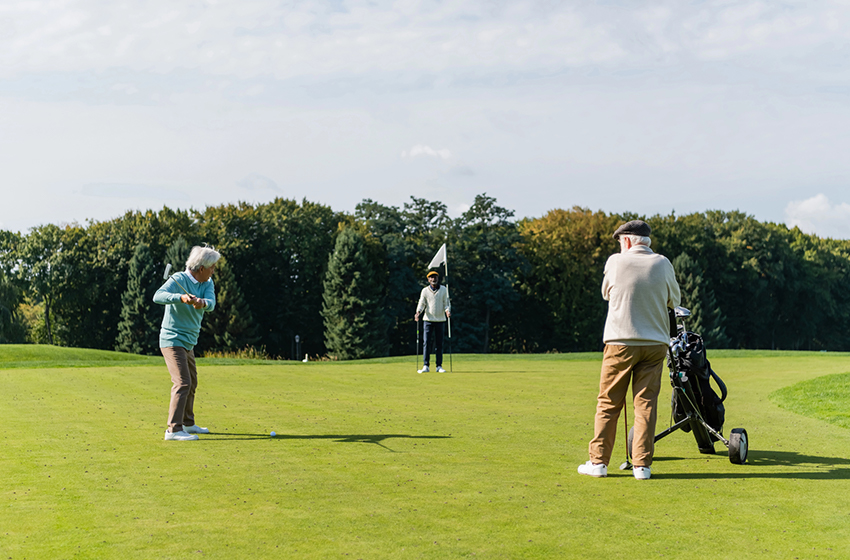
You come for air, friendly company, and a few hours away from notifications. Seven minutes later, your ball is heading toward strangers, your shoulders are tense, and you are shouting across the course like an unpaid town announcer. So much for serenity. Golf has a strange talent for exposing the gap between who we imagine ourselves to be and who appears after a sideways tee shot. Yet the same game offers chances to pause, reset, and enjoy the afternoon. You don’t need silent fairways or flawless swings. You need a different response when the round stops following your script.
Many golfers arrive with a quiet condition attached to their enjoyment: they will relax once they start playing well.
That sounds reasonable until the opening hole delivers the lost ball, a missed putt, and a disagreement with a tree. Suddenly, the entire afternoon feels like something you must salvage.
Try changing the condition. Decide before the round that enjoyment can include awkward shots, uneven scoring, and moments of frustration.
This doesn’t mean abandoning your playing goals. It means refusing to let every swing decide the mood of the next ten minutes.
When exploring golf course experiences, think beyond the score you hope to shoot. Consider the company, the setting, and the time you have available.
Give the day more than one way to succeed, and a disappointing opening hole has less power over everything that follows.
A ball heading toward other people is not the moment for a breathing exercise or an embarrassed whisper.
Call “FORE!” loudly and quickly when your shot could put someone at risk. Warn others even if you are unsure whether the ball will reach them. If you can clearly identify the direction, add that information to help people understand the warning.
Once the immediate situation has passed, you can deal with your reaction.
Turning that embarrassment into anger rarely improves the next shot or the atmosphere around you.
Follow the venue’s instructions and accept responsibility for your play. If an apology is proper, keep it straightforward.
Practical golf course etiquette creates space for everyone to enjoy the round. That includes speaking up when needed, respecting other players, and understanding that composure doesn’t require silence. Sometimes the considerate response is the loudest thing you say all afternoon.
The walk after a poor shot can become a moving courtroom. You prosecute your swing, question your equipment, and replay the mistake until you reach the ball.
Give that walk a simpler job.
Choose a target, assess the lie, and select a shot you can reasonably attempt. These small actions give your attention somewhere useful to go.
For golf practice sessions, rehearse this reset as well as the swing. Hit a shot, step away, then begin again with a fresh target and a short routine.
The aim is not to erase frustration. You are creating a pause between feeling annoyed and acting annoyed. That pause can help you avoid rushing, arguing with yourself, or attempting a dramatic escape shot simply because the previous swing bruised your pride.
Your playing partners are probably thinking about their own shots more than yours. Yet one mishit can make you feel as though the whole course has gathered to judge you.
That imagined audience changes your choices. You reach for a club you struggle to use, attempt a narrow gap, or swing harder because the previous player hit farther.
Ask yourself a practical question: what would I choose if nobody were watching?
The answer might be a shorter club, a wider target, or a simple shot back into play.
When arranging beginner golf sessions, look for formats that leave room to ask questions and practice without unnecessary pressure. Explain your experience level without making an inquiry.
Experienced golfers can use the same principle. A sensible decision doesn’t become less useful because it looks ordinary. Let the situation shape your next shot, and give the imaginary spectators the afternoon off for once.
You reach the fairway, unlock your phone, and discover a message that drags your attention straight back to work.
Now your body is beside the ball while your thoughts are inside a conversation happening somewhere else.
Before the round, decide what your phone needs to do. You may use it for scoring, course information, or necessary contact. Everything else can have a different time slot.
Mute nonessential notifications if your circumstances allow. Tell anyone who needs you how to reach you, then put the screen away between practical uses.
For social golf booking, discuss expectations with your group. Some players enjoy photos and frequent updates. Others want a quieter afternoon together.
Try one hole without browsing. Listen to the conversation, notice the ground under your feet, and see how much of the round usually disappears behind your screen.
A rushed arrival can follow you around the course long after you unpack your clubs.
If you have squeezed golf between appointments, every delay starts feeling personal. A group ahead pauses, and suddenly you are calculating how late you will be for dinner.
Choose your session around the time you actually have.
Compare nine hole golf booking options when a full round would stretch your schedule. Allow time for travel, preparation, and any venue arrival requirements.
If you want a shorter indoor outing, explore golf simulator sessions. Ask about duration, player capacity, equipment, and how the session is organized.
The format matters because relaxation needs some breathing room. Book an outing you can finish without watching the clock at every tee, and leave yourself enough time to enjoy arriving and departing too.
It can also turn three missed putts into a surprisingly tense lunch.
Agree on the tone before you start. Are you keeping scores, playing a casual challenge, or simply spending time together?
For group golf experiences, make room for different abilities and expectations. Discuss the format so nobody discovers halfway through that a relaxed outing has become a serious contest.
Avoid offering swing advice unless someone wants it. A frustrated player may prefer a moment of quiet to unsolicited lecture beside the bunker.
Celebrate enjoyable shots without turning every hole into a ranking exercise. Keep conversation moving beyond the scorecard when the mood needs a lift.
You can compete and still be pleasant company. The useful measure is whether everyone wants to play together again. A small victory loses some appeal when it comes with an awkward silence on the journey home.
The final putt drops, but your mind keep playing the seventh hole.
You tend to replay the missed chances, calculate the score you would have made, and carry the frustration into the evening.
Give the round a short closing routine instead. Name one thing you enjoyed, one decision that worked, and one skill you want to practice next time.
Then leave the rest on the course.
When planning golf session booking, use that specific skill as the starting point. Describe what happens during your rounds and ask how a session could address it. A clear purpose makes the inquiry more useful than a general complaint around playing badly.
It doesn’t need to become a replay of everything that annoyed you. Finish the round, gather your belongings, thank your playing partners, and let the afternoon become a memory rather than an argument.
You cannot plan every bounce, gust, or missed putt. You can choose your schedule, your company, and the way you approach the next shot.
Start there when arranging your next round. Share your available time, group size, experience level, and preferred pace when requesting options. Ask about inclusions, arrival instructions, and booking conditions at your venue before deciding.
Inner peace on a golf course might still include a loud "FORE!" and a ball visiting unfamiliar territory. The difference is what happens afterward. Pause, make the next sensible choice, and remember why you wanted this afternoon in the first place.